2027-28 First Nations Composer in Residence
Thursday 9 July, 2026
We interviewed Yuin-based Warrimay composer Nicole Smede about being the 2027-28 First Nations Composer in Residence with Ensemble Offspring.
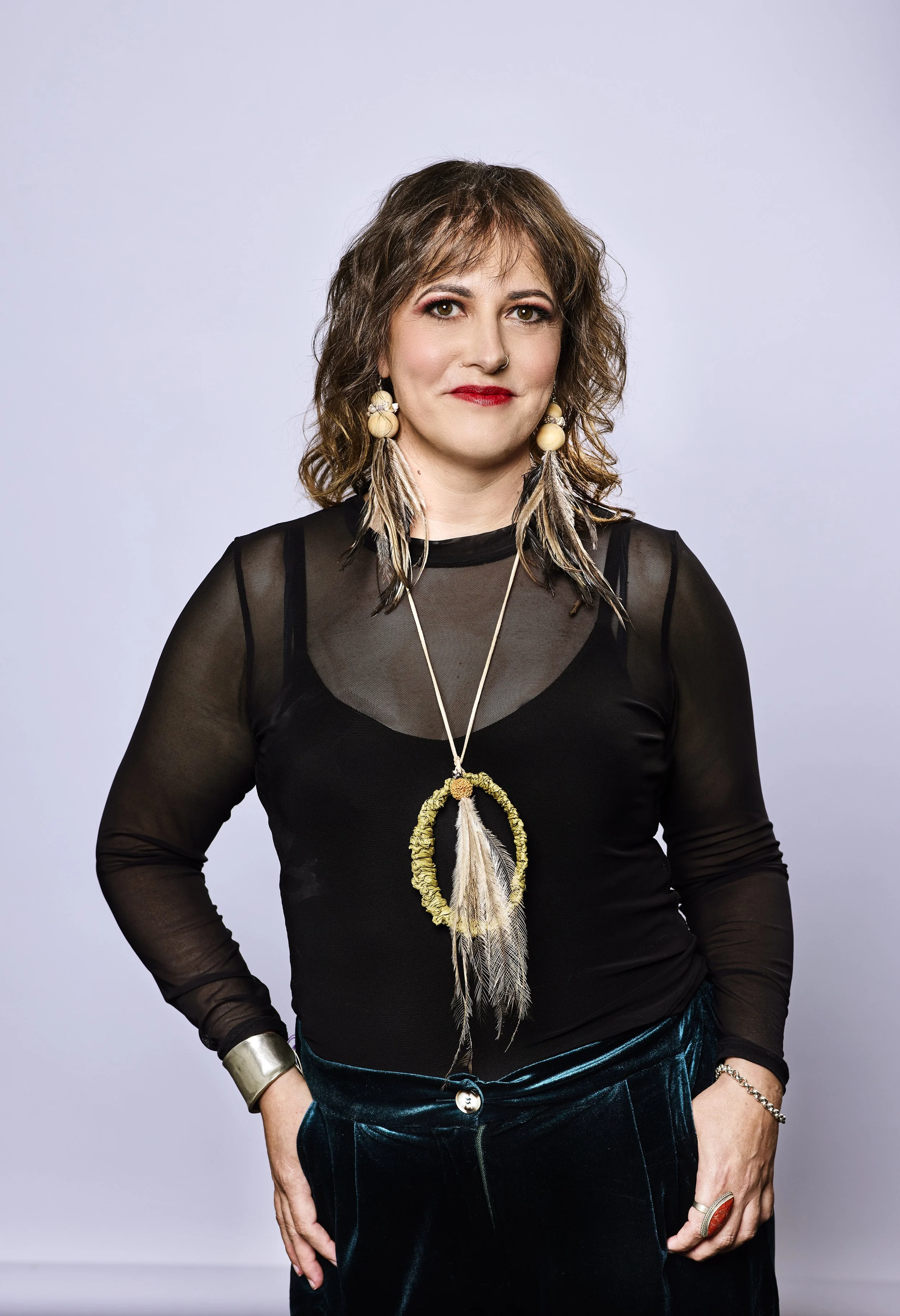
Image by Keith Saunders
How do you feel about being Ensemble Offspring’s next First Nations Composer in Residence?
I’m genuinely excited about this opportunity. I studied a Bachelor of Vocal Performance, and the running joke was always that singers aren’t “real” musicians. I never dreamed I’d one day be a composer outside my own backyard, so to be a “composer in residence” is a real honour.
I’ve written for EO twice now, so I’m looking forward to continuing the relationship and going deeper with them; pushing myself and learning along the way.
You are a multi-disciplinary artist; a writer, poet, composer and singer. How do these different artistic practices influence your approach to composing?
They’re all entwined - threads on the same creative web, each informing the others.

Image by @teschka
I often start with poetry. Through listening and observation, my thoughts and “notes”, if you will, come out in the form of poems. From there I can keep building that imagery through visuals or music, whichever one wants to be born. Sometimes it’s multiple iterations from the same initial thought or poem.
So much of this begins with Country. I listen to Country, to what I feel and observe, and it finds a way through me and out into creative expression. Most, if not all, of my compositions are her voice as much as mine.
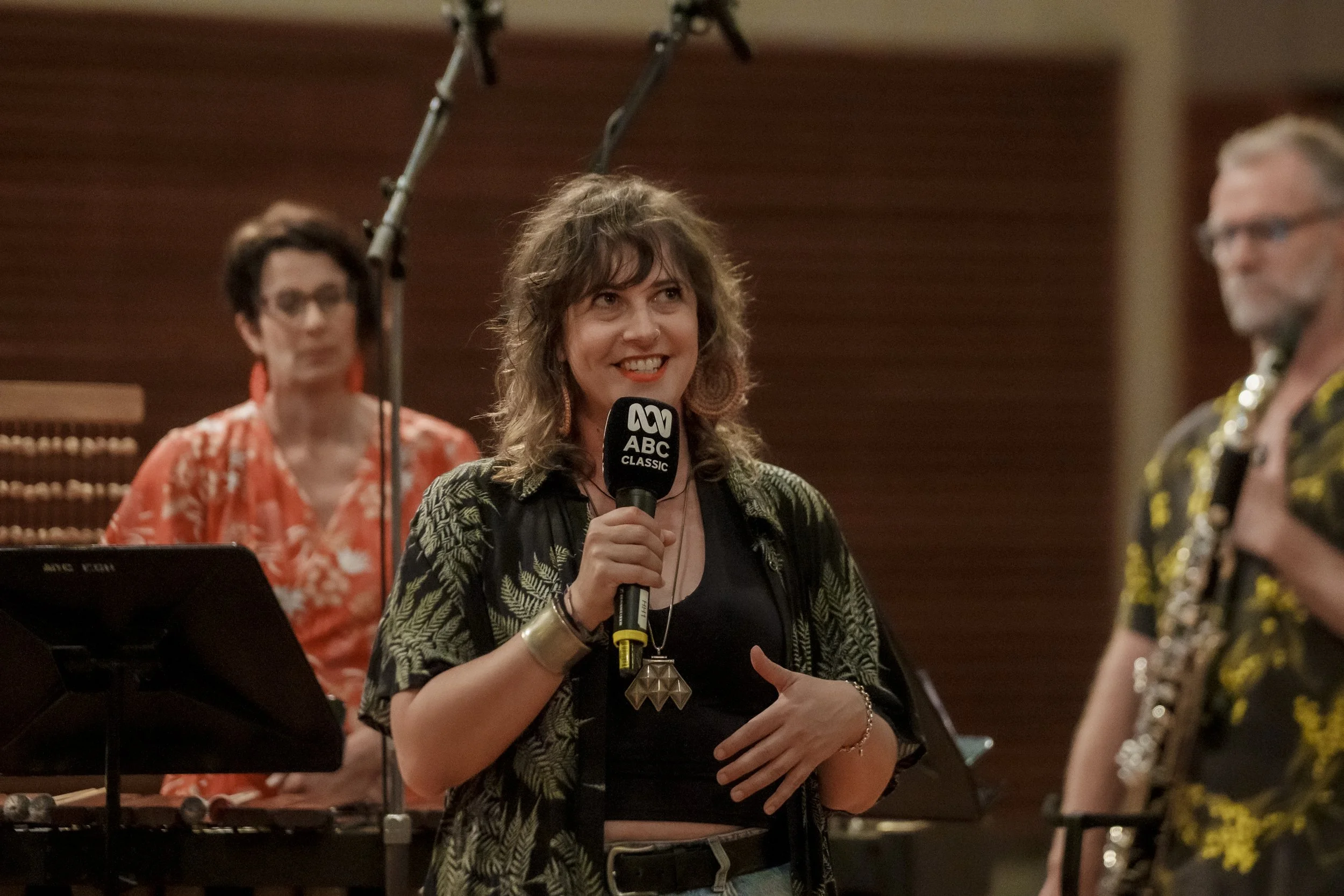
Image by Stephen Wilson Barker
For me it’s about the connections and the layers - the conceptual layers finding their best expression and building layers of meaning within the discipline. In music, that might be layers of rhythm, melody or instruments; in poetry - the layers of language; visual art - layers of paint and natural materials on a canvas…
You will be a panellist for The Lucky Country during NAIDOC Week - tell us a bit about your journey so far as a First Nations artist living on country and working in Australia?
I feel grateful to be an artist, and deeply grateful to have a career as a First Nations artist. These opportunities are not lost on me.

Photo by Keith Saunders, image by Racket
It’s an exciting time: more people are opening up to the richness of First Nations voices and culture, and to the truth-telling of this Country. We have a lot more work to do but I do feel that as a society we are moving away from Western ideals of who and how to be, and slowly turning back toward a way of being that’s more in tune with ourselves and with Country, as a collective.
Like many families, mine has generations who never identified and or who hid their identity for shame, safety… they were punished for speaking language, for practicing culture, for their skin colour, and turned away. So I’m proud that opportunities like this are becoming more available and normalised. I hope that continues, and that more mob know that these spaces are for them too.
What is your experience of working with Ensemble Offspring thus far and what have you enjoyed about your collaborations?
I’ve really enjoyed working with EO over the years. I’ve had the privilege of knowing and working with many of EO’s instrumentalists for the last 15 years as both an arts producer, vocalist and composer. The quality of musicianship is outstanding. It has been a joy, and a challenge, with learning curves to match their level of excellence as I navigate this space of ‘emerging composer’.
What are you looking forward to most as Ensemble Offspring’s First Nations Composer in Residence and do you have an idea of the piece/s you will write?
I look forward to more learning curves and joyful challenges as I have no idea what I will write yet - it will be a surprise for us all - but one I welcome and I know Country will have something for me - something to say through those many threads!